
Discussions
Join the conversation. There are currently 8,084 discussions.
Discussions
This tool assists individuals to manage their Bronchiectasis. The tool outlines steps for daily management and provides guidance on what to do if symptoms increase: https://www.bronchiectasisandntminitiative.org/Portals/0/DownloadsLibrary/Files/ActionPlanEnglish.pdf
The information below is taken from a paper, Reducing Environmental Exposure to NTM, by Joseph Falkinham, PhD, May 3rd, 2021
Flush and Run Water in Unused Lines to Reduce Water Age. Water age refers to the time water stays in pipes in houses. The average water age in household plumbing is 1-3 days. Residence of water for over 3 days leads to a loss of disinfectant and the resulting growth of NTM and other waterborne pathogens. Increased water age can occur in plumbing in areas of a house that are unused; for example, in an unused bathroom or unoccupied wing of a house. The solution is simple, have someone not at risk for NTM disease to flush commodes and run water (5 min) in taps in unused bathrooms and in seldom used laundry tubs, half baths, and outside faucets.
Having another family member or friend flush the system will reduce your exposure to NTM. Enjoy your getaway.
It is recommended that you unscrew the showerhead and submerge it in undiluted bleach for 30 minutes. Remove it from the bleach and rinse before screwing it back on the shower tap.
It is also recommended to replace the showerhead with one that produces fat streams, not a mist.
Many “low-flow” showerheads produce a fine mist that contains droplets with high numbers of NTM; small enough to enter the alveoli of your lungs. Replace such a “low flow” or misting showerhead with one that has large holes (greater than 1 mm diameter).
Joe Falkinham’s paper on Reducing Exposure to NTM, 202
The link below reviews the diagnostic tests used to determine whether or not a patient has an Aspergillosis infection: https://fightfungus.org/diagnostic-testing-aspergillosis/
I have intermittent asthma, resulting in an onset of wheezing, which often occurs with severe weather changes. The symptoms of asthma are often confused with a respiratory flare-up. The symptoms of asthma may lead one to be anxious, fearing that they are getting a respiratory infection / NTM or worsening of their Bronchiectasis when it could be asthma. Asthma may be short-term for many individuals and treated with an inhaler or nebulizer.
Below is an article from the Mayo Clinic on the basics of asthma:https://www.mayoclinic.org/diseases-conditions/asthma/symptoms-causes/syc-20369653
I have intermittent asthma, resulting with an onset of wheezing, and occurring severe weather changes . The symptoms of asthma are often confused with a respiratory flare up. The symptoms of asthma may lead one to be anxious, fearing that they are getting a respiratory infection / NTM or worsening of their Bronchiectasis when it could be asthma. Asthma maybe short term for many individuals and treated with an inhaler or nebulizer.
Below is an article from the Mayo Clinic on the basics of asthma:https://www.mayoclinic.org/diseases-conditions/asthma/symptoms-causes/syc-20369653
There are many causes of post nasal drip, including sinus infections and allergies. The link below reviews the basics of post nasal drip and the treatment options: https://www.bronchiectasisandntminitiative.org/BronchandNTM360social/Community-Discussions/Blog/Article/167/Postnasal-Drip-in-the-Bronchiectasis-Patient
Stress and strong emotions can present with respiratory symptoms, such as shortness of breath and rapid breathing, as the airway between the nose and the lungs constricts. For people without respiratory disease, this is generally not a problem as the body can manage the additional work to breathe comfortably, but psychological stressors can exacerbate breathing problems for people with pre-existing respiratory diseases such as asthma and chronic obstructive pulmonary disease.
https://www.apa.org/topics/stress/body
This tool assists you to identify, track your symptoms so you are able to communicate more effectively with your health care provider. https://www.bronchiectasisandntminitiative.org/Portals/0/DownloadsLibrary/Files/NTM_Management_Tool.pdf
Please let us know if you have any specific questions.
The link to the Bronchiectasis Action Plan tool may assist you in tracking your symptoms and communicating effectively with your health care provider. https://www.bronchiectasisandntminitiative.org/Portals/0/DownloadsLibrary/Files/ActionPlanEnglish.pdf
Common side effects include a metallic taste and an upset stomach . The link below goes into greater details about this drug: https://www.drugs.com/clarithromycin.html
Please let us know if you have any questions.
Ethambutol is best taken on an empty stomach, 1 hour before breakfast. Do take the full dosage of 2-3 pills at the same time- do not divide the dosage throughout the day.
Lab tests- a CBC( cell blood count) and a Biochemistry panel should be done monthly, especially checking for liver function.
It is important to be under the care of an ophthalmologist or a neuro- owhile on Ethambutol. It is recommended to read small print daily- if blurry vision occurs two days in a row- stop the Ethambutol and see your ophthalmologist as soon as possible.
( NTM Patient Course, Management of Medication Side Effects, Dr. Gwen Huitt)
It is recommended that you have your hearing checked at least every 6 months or much more frequently if you already have a hearing loss.
It is recommended that you take Rifampin at bedtime with a saltine cracker and a few sips of water.
Labwork is recommended once a month which includes a Cell Blood Count,( CBC) that checks your white blood cell count and your platelet count, ( clotting ).
A Biochem Panel, ( also known a as a SMA20) is done to check the biochemistry of your blood , which includes checking your liver function, sodium, potassium and other essential elements in your blood necessary for proper functioning of your body
The link below provides an interaction checker to alert you if there is any drug to drug interactions, drug and food interactions: https://www.drugs.com/drug_interactions.html
Different antibiotics are used to treat different types of respiratory infections. The link below reviews the basic function of antibiotics and describes the details for each antibiotic listed.
You will find that a certain antibiotic or a few antibiotics which agrees with you more than others . It is hard to remember the side effects of a drug that used years ago- a log to track your antibiotics will lessen the chance of repeating an antibiotic that did not agree with you in the past. https://www.drugs.com/article/antibiotics.html#a5
Using a pillbox lessens the chance of forgetting to take your medication or taking too much medication. Filling the pillbox on a weekly basis also allows you to see if you need to call for a medication refill in a timely manner. The link below reviews top rated pillboxes: https://www.goodhousekeeping.com/health-products/g63409243/best-pill-organizers/
The link below reviews the most commonly used meds to loosen up sputum: https://www.bronchiectasisandntminitiative.org/Learn-More/I-am-a-Patient-or-Caregiver/Coping-with-Airway-Mucus/Medicines-for-Airway-Clearance
The link below offers some suggestions for dealing with nausea: https://www.bronchiectasisandntminitiative.org/Learn-More/I-am-a-Patient-or-Caregiver/Coping-with-Nausea
It is important that you leases the nausea so you can eat nutritious meals that will assist you with healing.
Increased humidity- moisture in the air can affect how many respiratory patients feel on a rainy day. The blog article below reviews the impact of weather changes on our bodies: https://www.bronchiectasisandntminitiative.org/BronchandNTM360social/Community-Discussions/Blog/Article/54/Why-Weather-can-Worsen-your-Lung-Condition
The link below reviews the basics of inhaler and nebulizer usage: https://www.bronchiectasisandntminitiative.org/Learn-More/I-am-a-Patient-or-Caregiver/Inhaled-Medicines
Please let us know if you have any specific questions.
Below is a link to a wallet card that will allow you to keep an organized list of your medications, allergies, vaccinations and sputum culture results. This will assist you with your health care provider visits, picking up drugs at the pharmacy, and morehttps://www.bronchiectasisandntminitiative.org/Portals/0/DownloadsLibrary/Files/WalletalletCard_Bronch_NTM_Web.pdf
Below is an article that reviews tips on how to deal with seasonal allergies: https://www.everydayhealth.com/allergies/how-to-get-ahead-of-allergy-season-this-spring/
I was very surprised to see a forum for this affliction. Had MAC since 2019 but Dr decided to recognize it only recently after having a bronchoscopy. Looking back at all my CT Scans it was there all the while & why it was chosen to be overlooked is a mystery. I have COPD but was complaining of severe shortness of breath that my pulmonologist said wasn’t from my lungs must be heart (I get ct scans every 6mos, looking back at those reports all have MAC all over them) but I listened, went thru a wild goose chase with heart drs & other specialists to come back to my lungs. A broncoscopy was ordered and now Dr says this is what’s goin on. I dwell on that this wouldn’t be so bad if he didn’t overlook it from the start & why would he? I just got out of a short hospital stay for acute hypoxemic failure now have to breath with oxygen & soon my MAC treatments will start, I am scared to death! I’m scared of the side-effects. My hearing is the Only good thing I have left and I read that this can be affected by the antibiotics. I need to know what to expect so I can brace for it, can someone please answer truthfully what I have to look forward to especially in the beginning stages of treatment
Airway Clearance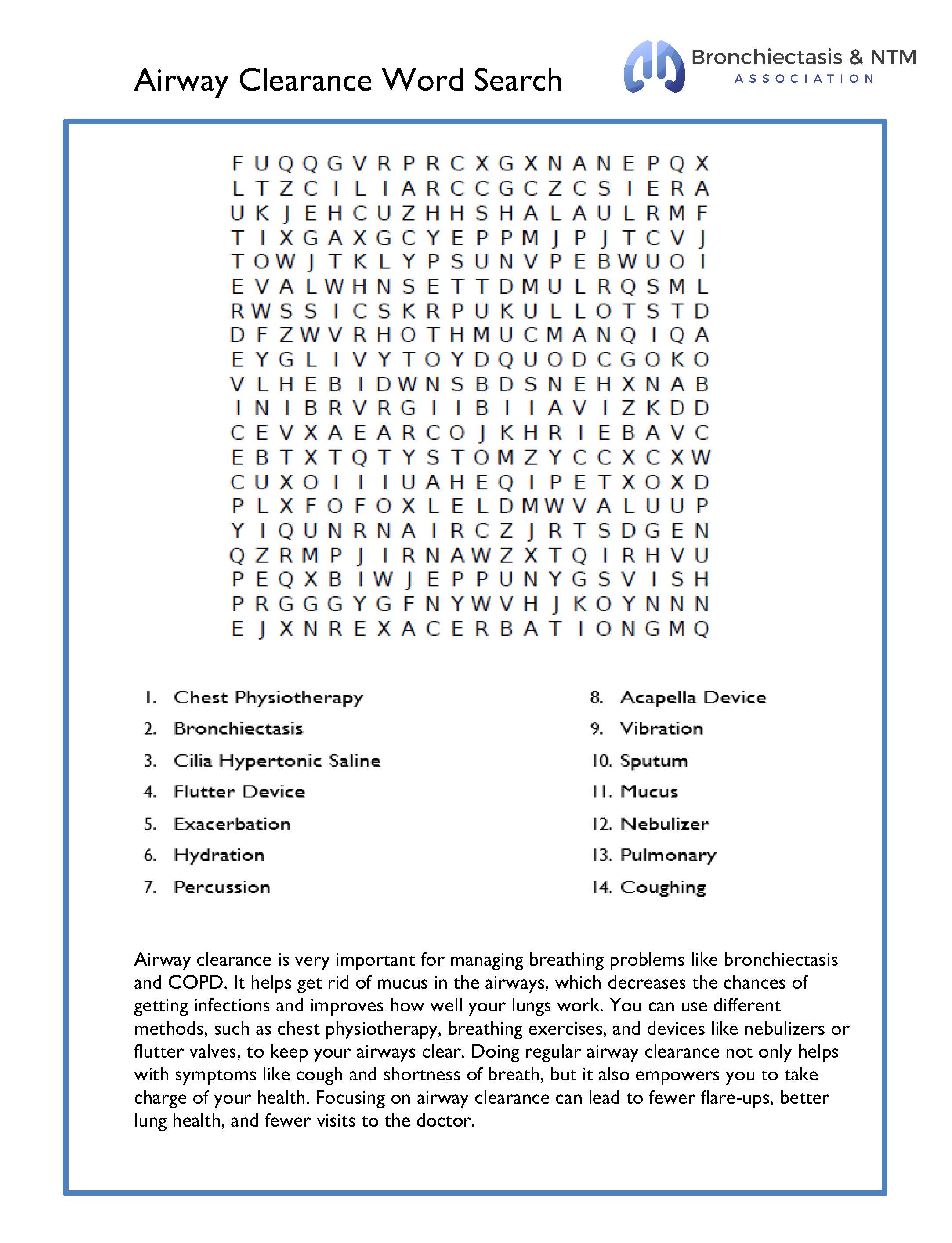
It is not our intention to serve as a substitute for medical advice and any content posted should not be used for medical advice, diagnosis or treatment. We make every effort to support our members, our medical professionals cannot and will not provide a diagnosis or suggest a specific medication; those decisions should be left to your personal medical team. While we encourage individuals to share their personal experiences with Bronchiectasis and NTM, please consult a physician before making changes to your own Bronchiectasis and NTM management plan.
Community posts are monitored by the 360social Community Manager, as well as staff respiratory therapists, educators, and other medical professionals.